

The Overthinking Toolkit
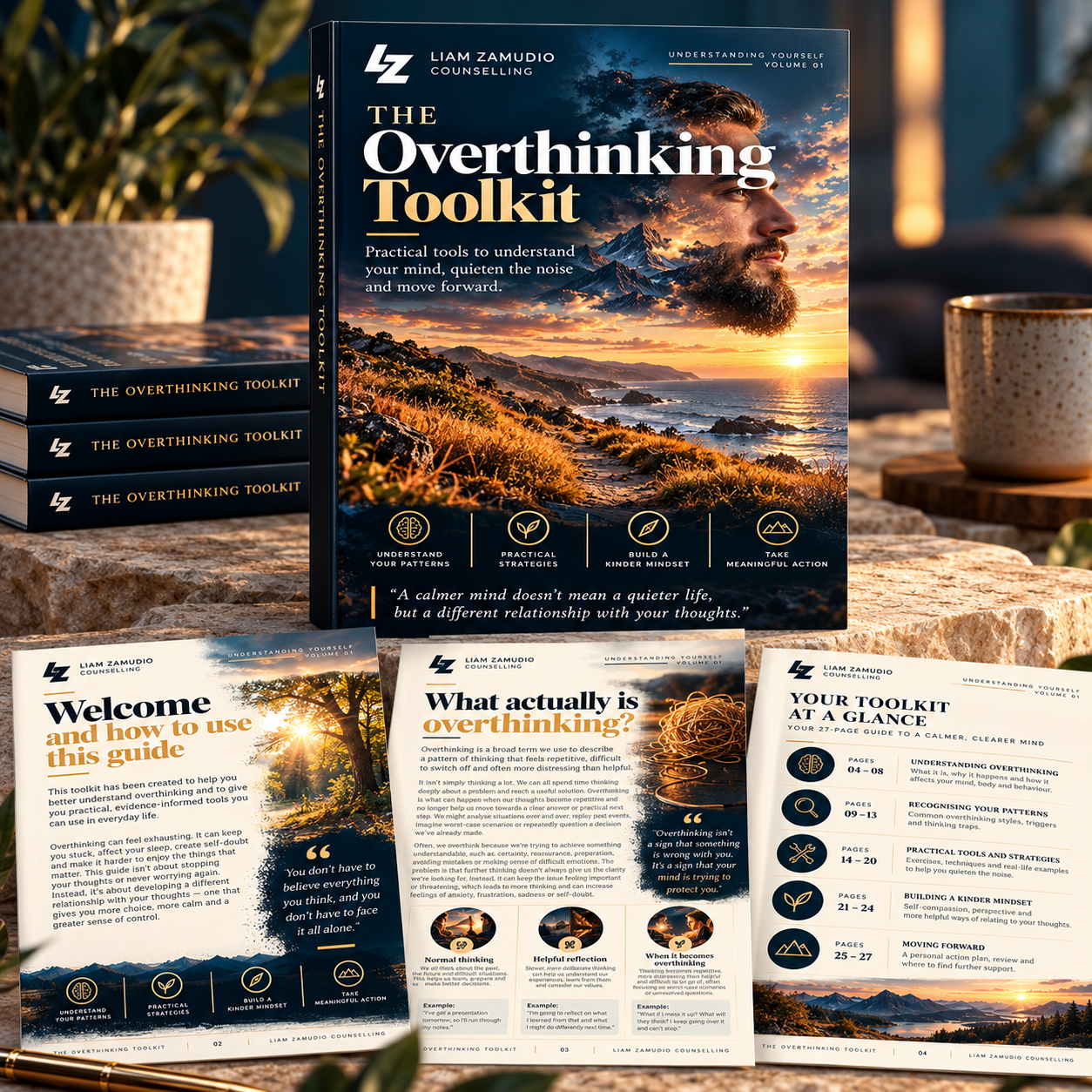
The Overthinking Toolkit
Understanding repetitive thoughts, breaking free from mental loops and learning to find greater clarity and peace of mind.
Do you find yourself replaying conversations long after they've ended? Worrying about things that haven't happened? Questioning decisions you've already made, imagining worst-case scenarios or struggling to switch off even when you're exhausted?
Overthinking can be mentally draining. What often begins as an attempt to solve a problem, prevent a mistake or gain certainty can develop into an exhausting cycle of worry, self-doubt and repetitive thinking.
The Overthinking Toolkit is a beautifully illustrated, psychologically informed digital workbook designed to help you understand why your mind gets caught in these patterns and develop practical strategies for responding differently.
Combining accessible psychological explanations with guided reflection and evidence-informed therapeutic techniques, this resource explores the relationship between thoughts, emotions, uncertainty and behaviour, helping you recognise when thinking has stopped being helpful and started keeping you stuck.
Inside the toolkit, you'll explore:
-
Understanding overthinking: Why we overthink, what drives repetitive thought patterns and how they can affect emotional wellbeing.
-
Worry and rumination: Recognising the difference between worrying about the future and repeatedly analysing the past.
-
The overthinking cycle: Understanding how uncertainty, anxiety, self-doubt and attempts to gain reassurance can reinforce repetitive thinking.
-
Recognising your triggers: Identifying situations, emotions and underlying beliefs that encourage your mind to go into overdrive.
-
Unhelpful thinking patterns: Exploring catastrophising, second-guessing, excessive self-criticism and other habits that can distort perspective.
-
Managing uncertainty: Developing a healthier relationship with the unknown and reducing the need to have every possible answer.
-
Breaking mental loops: Practical strategies for stepping away from repetitive thinking and redirecting your attention.
-
Self-compassion and acceptance: Learning to respond to difficult thoughts without unnecessary criticism or judgement.
-
Moving from thinking to action: Recognising when reflection is useful and when taking a manageable step forward may be more helpful.
-
Personal reflection and practical exercises: Opportunities to explore your own thinking patterns and develop strategies that work for you.
You don't have to solve every thought that enters your mind.
This toolkit isn't about forcing yourself to think positively, suppressing uncomfortable feelings or trying to empty your mind. Instead, it encourages a more balanced relationship with your thoughts, helping you recognise which ones deserve your attention and which you can learn to let pass.
Through relatable examples, thoughtful illustrations and practical exercises, you'll be encouraged to explore your experiences at your own pace and develop skills that support greater psychological flexibility, self-awareness and emotional wellbeing.
Whether you struggle with constant worry, replaying conversations, difficult decisions or the exhausting need to get everything right, this toolkit offers a structured and compassionate starting point for change.
Product details
-
Format: Digital PDF download
-
Designed for self-guided learning and personal reflection
-
Includes psychological explanations, practical strategies and reflective exercises
-
Suitable for digital use or printing for personal use
-
Created by Liam Zamudio, qualified psychotherapeutic counsellor and hypnotherapist
This toolkit is an educational self-help resource and does not replace professional counselling, diagnosis or mental health treatment.
Your experiences are individual. Your counselling should be too.